No hay productos en el carrito
Ir a la tiendaEnvíos sin recargo

En compras superiores a USD $60


$51.15
 Producto elegible para envío gratis
 Este producto suma 1 Rewards
 COMPRA SEGURA
……………………………………………………………………………………………..
Gödel: Gödel’s incompleteness theorem is one of the most profound and paradoxical results in mathematical logic. It is also, perhaps, the one that has exerted the greatest fascination in fields far removed from the exact sciences. Cited in disciplines as diverse as semiotics and psychoanalysis, philosophy and political science, the phenomenon of incompleteness has also been associated with supposed defeats of reason and the end of certainty in the most exclusive terrain of thought: the realm of exact formulas. But also from within science, Gödel’s theorem is wielded in sharp epistemological controversies, such as the one surrounding discussions on artificial intelligence. Arising almost at the same time as the Theory of Relativity, and perhaps more stealthily, Gödel’s theorem has become a fundamental piece and an unavoidable reference of contemporary thought.With the purpose of making it accessible to an audience that does not necessarily have a mathematical background, Guillermo Martínez and Gustavo Piñeiro have achieved a detailed, rigorous, but extremely smooth, totally self-contained exposition: masterful. They also discuss with authors such as Kristeva, Lacan, Debray, Deleuze, and Lyotard, who have invoked Gödel and his theorems in risky analogies. The remarkable achievement of this book is that both people of any discipline who have only the indispensable “curiosity of spirit” and those who have studied Gödel’s theorems will be able to venture into the experience of knowing in depth one of the most extraordinary intellectual feats of our time; because although it starts from scratch, it goes far beyond what the best known divulgations in the Spanish language have proposed.
En compras superiores a USD $60

Todas las compras suman rewards y puedes utilizarlos para descontar dinero en tus compras.

Siempre respondemos ante eventualidades.


2026 - Todos los derechos reservados
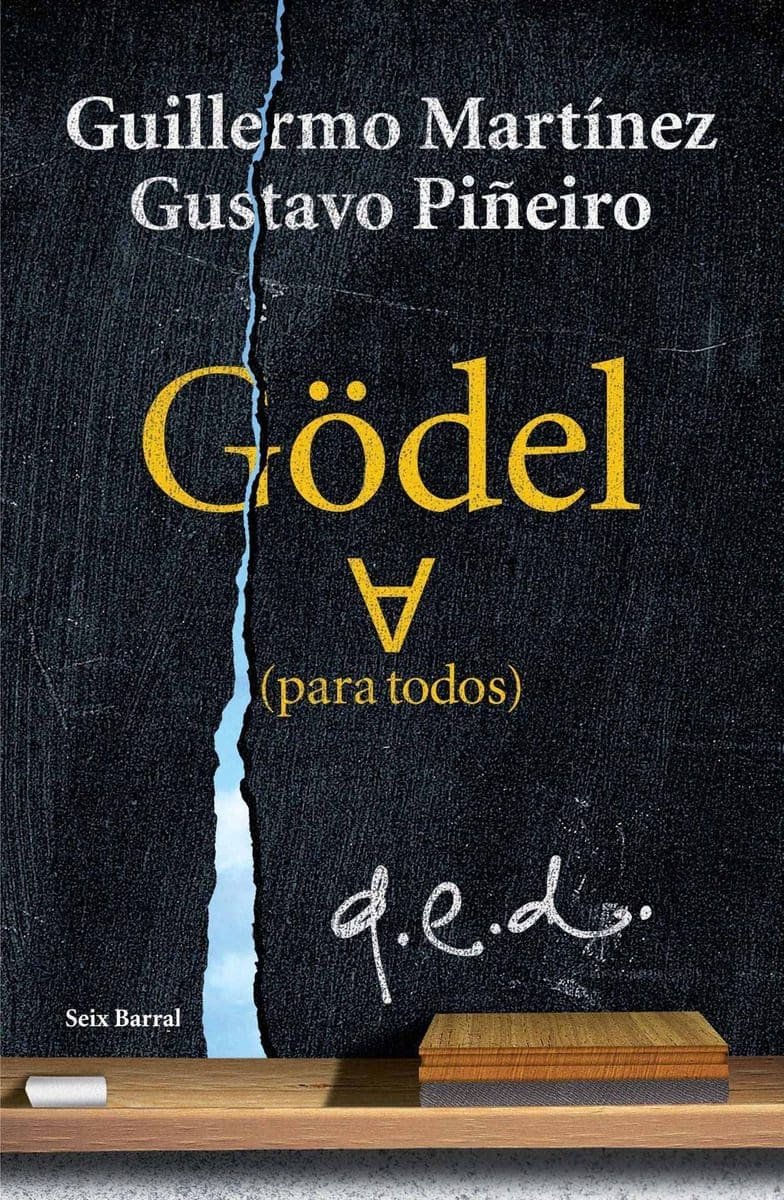 Guillermo Martinez y Gustavo P...
 $51.15